Sunday, 13 January 2013

Ancillary Task: Research and Planning: Part Two

Independent Hollywood is a colossal chunk of films. We decided to narrow the spectrum to Independent Horror Films.


One of the key films I researched was a Swedish Vampire film "Let The Right One In." directed by Tomas Alfredson.
"Oskar, a bullied 12-year old, dreams of revenge. He falls in love with Eli, a peculiar girl. She can't stand the sun or food and to come into a room she needs to be invited. Eli gives Oskar the strength to hit back but when he realizes that Eli needs to drink other people's blood to live he's faced with a choice. How much can love forgive? Set in the Stockholm suburb of Blackeberg in 1982." Written by John Nordling, Producer.
                                There were many different posters created for this particular film.

Another example of an independent horror film is BITTER FEAST (2010) Written and Directed by Joe Maggio. "A celebrity chef exacts revenge on a food blogger who torpedoes his career."-IMDb  

As can be seen, the poster is extremely compelling, giving very little away about the story, other than the fork and spoon, along with the plate of food, which suggests his status as a chef.


The Loved Ones

"Okay, this is a bit of a cheat. I did not see this for the first time this year, rather my very first viewing was 2 years ago, but due to the fact that it had a US release in 2012 I had to include it. Not only is this my joint pick of the year, it is one of my favourite films of the last 10 years.We follow Lola, a gloriously creepy Australian teenager, as she sets about trying to win the heart of a classmate, with a rather unusual flattery technique, including nails, syringes, drills, one particularly devoted father and a song you won’t be able to hear ever again without shuddering. Brutally fantastic, Lola Stone is one of the most original psychopaths we’ve seen for years, making this film without doubt a must-see."- HorrorQueen


Here is the poster for The Loved Ones, it is a classic case of "The more you look, the more horrific it gets." there is also, much like Let The Right One In, another poster. This one features the phrase "Prom night can be torture." Which is a case of dramatic irony, as it is usually associated with girls not knowing what to wear to prom, or getting stressed about it. However, the meaning in this film is literally that she tortures her "Prom Date." I picked up on this use of a catchphrase on horror film Posters.  For my film poster I used "She's waiting." Similarly having a double meaning.


Bibliography:


Friday, 11 January 2013

Music Ideas #1

I have been considering music for my short film, what tone? What genre? Will there be any lyircs.
I have loved this band called The Cure for years, and their song "A Forest." Is perfect for my short film, this is because it has a certain tone of mystery, also I wanted to use a song which meant something to me. However, due to copywright issues I cannot use this exact song. HOWEVER, I can use a cover by a far more unknown artist. So far I have found two covers which I really like.

Here is the original


And here are the two covers...
 

I LOVE this cover so much as it so tech-y and it doesn't have lyrics which I like, as the viewer is less likely to get distracted from the film by the music.
 
 
Here is a version by a female singer. I really like her voice but I felt that in the original, because it was a male, it fit better with Jack almost like a narrator.


Day 1 of Filming

This is one of the two shoots I will be doing for my short film. However, it is now safe to say I have 80% of my film done. The shoot began at 10:30 this morning and ended at 3:30 this afternoon. So was a fairly long, however successful shoot. The second part will be about half the time, perhaps even less as there is far less to film.

I started off doing Jack's make-up which took a fair amount of time to capture the dark and Gothic look. Here is the video of me creating Jack's look...


I took photographs of the sets I created for the film...
 Here are a couple of the roads I used. For example, this picture is of a housing estate called Poppy Fields. I used this as it is always very quiet, making it easier to film in. It also gave the film a far more urban feel. I also chose areas which led on to countryside tracks to vary the setting.


I changed a few aspects of the original shot list such as the opening of the parcel was not stop-motion as I felt it was more naturalistic to the film. But in general the shots were pretty much the same.


Shot List


1. Title, I have not yet decided on a font but am fairly sure I'm going to title the film "Jack". I tested out a few fonts curtousy of DaFont.com. Aiming for a curly, fairytale-type feel I tested on a variation of fonts. Here are my results...  
(Alongside the title will be the sound of an alarm clock...http://www.youtube.com/watch?v=ytKfoo1Yqsw http://www.youtube.com/watch?v=ZZvRjF-X-C0)

2. Shot of eyes opening, suddenly.

3. Bird's eye view shot of man lying in bed. In the frame only the top of his chest upwards will be visible. He will be wearing a grey t-shirt.

4. Shot of alarm clock being turned off (Cut-in shot.)

5. Shot of stairs and his feet coming down them as he comes into view.
 (Sound of doorbell ringing as he reaches the bottom of the stairs.... http://www.youtube.com/watch?v=y4E6tNhxeFo)


6. Shot from behind as he looks to the left in response to doorbell.

7. Shot of door from outside, Jack open door.

8. Close up of his confused face. (Reaction shot.)

9. Shot of parcel on door mat. (Point of View.) 

10. Side shot of box as it is picked up.

11. Shot of box on the table. (Point Of View)
12. STOP-MOTION OF BOX OPENING REVEALING THE HAT.

13. Hands reach down and grab hat (Point of view.)

14. Over the shoulder shot looking into the mirror as Jack puts on the hat. 


15. Same door shot as Jack leaves the house wearing black trousers, black shirt and hat.

16. Following Jack from behind shot as he walks down the street.
paper crumpling sound (http://www.youtube.com/watch?v=i867Jl7duPc)


17. Jack stops walking.

18. Cut-in shot of paper below his foot and his hand as he picks it up.

19. View of paper in his hand, revealing it to be a photo of Boy George.

20. Reaction close up of his confused face. 

21. Cut in of Jack's hands putting photo in his hat

22. Wide shot of Jack walking down the street

23. Shot of photo in a hedge as Jack walks towards the camera and takes the photo.

24. Jack puts photo in his hat.

25. Shot of photo stuck to a sign.

26. Wide shot as Jack walks into shot, and takes the photo. He puts it in his hat.

27. Shot from behind as jack walks down the street.

28. Jack finds photo pinned to a church sign.

29. He takes the photo looking a little frightened.

30. Shot from behind as Jack throws the hat on the ground, scattering photographs over the pavement and road.

31. Jack walks towards the camera, stops, sighs, turns around, runs back, gathers photos and hat and continues on his journey.

32. He walks up his friends drive and knocks on the door.

33. They all open the door and are all wearing different hats.


Thursday, 10 January 2013

Planning: Prop List

1. The bowler hat and The Lion Hat

2. Photos
3. Cardboard box
4. Jack's outfit. [See blog post]
5. The girl's outfit [See blog future post]

Wednesday, 9 January 2013

Sunday, 30 December 2012

Ancillary Task, Part One: Research


Since the 1920s the US film industry has grossed a higher profit each year than that of any other country. We have been set the assignment to produce a film poster (Key Art) inspired by an era of Hollywood Cinema history. There are four different periods of Hollywood we have the option to choose from.


The Silent Film Era, 

Before the first world war, movies were made in a variety of American cities. However, these film-makers began to journey toward Southern California, here the industry developed and became Hollywood. This was because of the mild climate, cheap land and, fairly, reliable sunshine, which meant that they could film outdoors all year round. The area also had variation in it's scenery, allowing a change in set. Movie-Makers from Elso came to Southern California. Hollywood hit it's peak during the 1940s, releasing approximately 400 movies a year. With about 90 million Americans a week going to the cinema to see them.

However, films began to be released with synchronised voices, these "Talkies" became far more popular than the silent films and left many silent film actors out of work. This was because often, they could not speak particularly good English, or had strong accents as often foreign actors were used. Similarly, actors who struggled to learn lines lost jobs in much the same way. This theme was presented in "The Artist" as a French actor in a silent film refused to move with the times on to Talkies, in fear of his accent being discriminated. 


"The Golden Age": Classical Hollywood Cinema,

From 1927 (the end of the silent film era) to the early 1920s, Hollywood released thousands of movies. The genres which were most popular were western, slapstick comedy, animated cartoon and biopic movies. Creative teams often worked on films made by the same studio. For example, Cedric Gibbons and Herbert Stothart worked solely for MGM films. MGM films had a claim that they owned "More stars than there are in heaven", this included "The King of Hollywood" Clark Gable and Judy Garland. This meant that studios could market their stars which lead to higher sales of the film. This can be seen in the poster for "It's a Wonderful Life." which features James Stewart taking up almost the entire poster and his name is predominantly larger than the other titles. This became known as "The Studio System." In the late 1940s, the Studio System hit a downfall. This was for many reasons. Firstly, Studios owned their own cinemas, showing there own films, meaning that smaller, poorer studios could not get into the limelight. 

Post-classical Hollywood


Often known as the "American New Wave", refers to the time from roughly the late-1960s (Bonnie and Clyde, The Graduate) to the early 1980s (Heaven's Gate, One from the Heart) when a new generation of young filmmakers came to prominence in America, influencing the types of films produced, their production and marketing, and impacted the way major studios approached filmmaking. The films they made were part of the studio system, and these individuals were not "independent filmmakers", but they introduced subject matter and styles that set them apart from the studio traditions that an earlier generation had established ca. 1920s-1950s. New Hollywood has also been defined as a broader filmmaking movement influenced by this period, which has been called the “Hollywood renaissance”. 

In retrospect, Jaws (1975) and Star Wars (1977) marked the beginning of the end for the New Hollywood era. With their unprecedented box-office successes, Steven Spielberg's and George Lucas's films jumpstarted Hollywood's blockbuster mentality, giving studios a new paradigm of how to make money in the changing commercial landscape. The focus on high-concept premises, with greater concentration on tie-in merchandise (such as toys), spin-offs into other media (such as soundtracks), and the use of sequels (which had been made more respectable by Coppola's The Godfather Part II), all showed the studios how to make money in the new environment.

On realizing how much money could potentially be made in films, major corporations started buying up the Hollywood studios. The corporate mentality these companies brought to the filmmaking business would slowly squeeze out the more idiosyncratic of these young filmmakers, while ensconcing the more malleable and commercially successful of them.

(Ref. Wikipedia.)


Modern Independent Hollywood

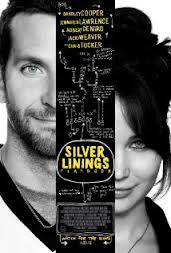
The area we chose to focus on for our film poster was modern independent. This includes studios such as The Weinstein Company in association with Dimension Films who created films such as The Silver Linings Playbook (2012), which has been nominated for 4 Golden Globes. Had 17 wins and a further 41 nominations (IMDB). 
"Life doesn't always go according to plan. Pat Solatano has lost everything - his house, his job, and his wife. He now finds himself living back with his mother and father after spending eight months in a state institution on a plea bargain. Pat is determined to rebuild his life, remain positive and reunite with his wife, despite the challenging circumstances of their separation. All Pat's parents want is for him to get back on his feet - and to share their family's obsession with the Philadelphia Eagles football team. When Pat meets Tiffany, a mysterious girl with problems of her own, things get complicated. Tiffany offers to help Pat reconnect with his wife, but only if he'll do something very important for her in return. As their deal plays out, an unexpected bond begins to form between them, and silver linings appear in both of their lives." The Weinstein Company